
What to Expect From Your IVF Medications: A Week-by-Week Breakdown
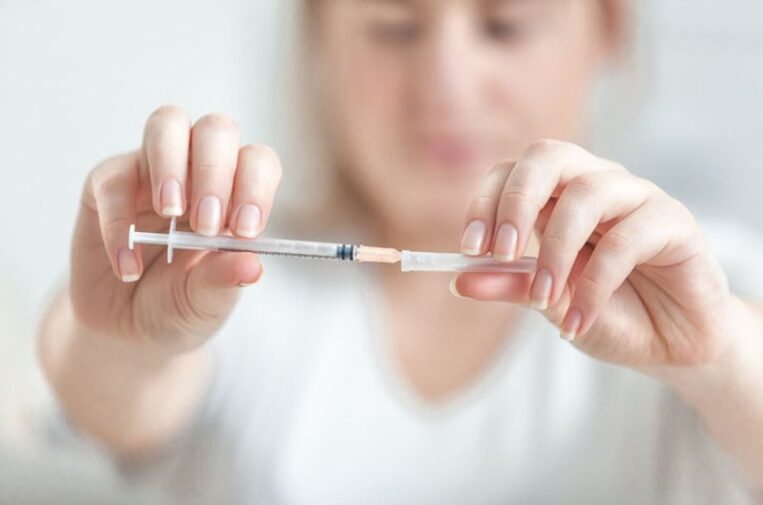
If you’ve just picked up your first IVF medication box, you know the feeling: a kitchen counter covered in vials, syringes, alcohol swabs, and a printed calendar with more abbreviations than you can keep straight. It’s a lot. Most patients tell us the medications feel like the most intimidating part of IVF, not because any single step is hard, but because there are so many moving pieces to track at once. Here’s what a typical stimulation cycle looks like, week by week, so you know what’s coming and why.
Why Medication Timing Matters So Much in IVF
During a natural cycle, your body typically develops and releases a single egg. IVF medications are designed to encourage your ovaries to develop multiple eggs in one cycle, giving your fertility team more embryos to work with and a better chance of success. That means the timing of each injection, and the spacing between doses, is carefully calibrated to your body’s response. It can feel rigid, but that structure is exactly what makes the process work — and your care team is adjusting it in real time based on how you’re responding.
Week 1: Starting Ovarian Stimulation
Most patients begin stimulation medications (often called gonadotropins) a few days after a short course of birth control pills, which begin soon after their period starts. The pills are designed to suppress and prep your ovaries so multiple eggs can grow synchronously. The injectable hormones, taken once or twice daily, then signal your ovaries to grow numerous follicles at once, each one potentially containing an egg. Depending on your specific protocol, you will often start an additional medication to prevent your body from ovulating too early, before your eggs are ready to be retrieved. This first week is mostly about consistency: same time each day, same technique, and getting comfortable with the process. It’s normal to feel a little bloated or tender as your ovaries respond.
Week 2: Monitoring, Adjusting, and Getting Ready to Trigger
Around days 3 through 7 of stimulation, you’ll start coming in for monitoring appointments — a quick blood draw and a transvaginal ultrasound every day or two. These visits let your doctor track follicle growth and hormone levels, and they may adjust your medication doses based on what they see. This is completely normal and doesn’t mean anything is “wrong” — it’s the process working as intended. By the middle to end of week two, your follicles should be approaching the right size, and your team will start talking with you about trigger timing.
The Trigger Shot: Timing Is Everything
The trigger shot is generally a single injection that tells your eggs to complete their final maturation, timed precisely so that retrieval happens 36 to 37 hours later. In some cases, you will be given a similar trigger analogue that is taken twice, 12 hours apart, again based on your individual protocol. Unlike your other medications, this one has almost no flexibility in timing — your fertility coach will give you an exact time that should be adhered to. Set an alarm, ask a partner or friend to confirm with you, and don’t be afraid to call the office if you’re unsure you did it correctly. This is the one shot where precision really matters.
Common Side Effects — and What’s Worth a Call to Your Doctor
Bloating, mild pelvic discomfort, breast tenderness, mood swings, and injection-site bruising are all common and expected as your hormone levels rise. Most of this resolves within a few days after retrieval. What’s not expected: severe abdominal pain, rapid weight gain, significant nausea or vomiting, or difficulty breathing. These can be signs of ovarian hyperstimulation syndrome (OHSS), which your clinic monitors closely for — but it’s always worth calling if something feels off rather than waiting it out.
Practical Tips for Managing Injections at Home
A few things patients tell us make the medication routine easier: set phone alarms for every dose rather than relying on memory, store medications exactly as directed (some need refrigeration, others don’t), let injections warm to room temperature briefly before administering to reduce sting, rotate injection sites to minimize bruising, and keep a simple log — a notes app works fine — so you’re not second-guessing whether you already took a dose. If you’re nervous about self-injecting, ask your nurse or fertility coach to walk through the technique with you more than once. There’s no such thing as too many questions here.
You Don’t Have to Navigate This Alone
The medication phase of IVF asks a lot of you — physically, logistically, and emotionally. But you’re not figuring it out from a pamphlet alone. Your nursing team is available for questions about doses, timing, and side effects throughout your cycle, and no question is too small. If something feels confusing or overwhelming, reach out. Understanding what to expect each week is one of the best ways to feel more in control of a process that can otherwise feel unpredictable — and as we have consistently done for countless patients, our team is here to help you through each and every dose.
You Are Not Alone. Our team is ready to help you!
We will assist you in every possible way to have a positive and successful experience as you proceed along your reproductive journey. Whether you desire a second opinion, or this is your very first visit to a fertility center, you can get started by scheduling an appointment today!

Request Your Appointment!
What our patients are saying

Dr. Qasim and his team are the best. They are very sensitive to their patients' feelings and problems. They helped me throughout the entire process and gave me so much strength when I needed it. My husband and I are currently 12 weeks pregnant, and we are the happiest. Dr. Qasim, thank you so much. May God bless you always.
Grecia C.
We can't express enough how grateful we are for the support and expertise we received from Dr. Rahul Sachdev and his team along our nurse Victoria from the very first consultation he and the team made us feel understood and cared for. They guided us through each step of the process with compassion and professionalism always taking the time to answer our questions and address my concerns.
Navi S.
5 weeks ago I delivered my IVF baby. I can't thank Dr. Sachdev enough for his knowledge and being straight forward with everything. The team was great as well. Thank you for my blessing 💕
Jennifer M.

Edison, NJ
CENTER FOR ADVANCED REPRODUCTIVE MEDICINE & FERTILITY
4 Ethel Rd, Edison, NJ 08817
Princeton, NJ
CENTER FOR ADVANCED REPRODUCTIVE MEDICINE & FERTILITY
114 Stanhope St, Princeton, NJ 08540
Cranford, NJ
CENTER FOR ADVANCED REPRODUCTIVE MEDICINE & FERTILITY
123 N Union Ave #102, Cranford, NJ 07016